Sunday, 5 December 2010

London to Brighton Trailer -Ms Wigley

Trailer Analysis - London to Brighton 
1. Media Forms: How does the trailer use media language to establish the film's genre?

The trailer of London to Brighton uses media language to establish  the films genre to the targeted audience. One way the trailer does this, is through the reviews that the film has been. Two of the reviews mention the genre of the film. "Blistering raw, utterly compelling drama" - The Times, another review quotes "Brutally raw thriller, with sharp serrated edges" - Film Review. This connotes to the audience that the film is an hybrid genre, a mixture of drama and thriller and attracts the target audience. The fast paced tempo music connotes the excitement of an thriller genre. Also the editing and the quick cutting connotes that the film is a drama genre. The close up shots show the facial expressions, reactions and emotions of the characters which is typical of a drama genre. The use of the close up shots of the protagonist while she is in the car and when she is being lead away by an old male connotes fear and she looks puzzled as she doesn't know what is going on around her.  Also the lipstick on her lips connotes that she is young, innocent as it hasn't been put on properly. this also sends out an engima code that the film may be distubing for some. It also connotes her lose of innocence as she being led away. 

Another way media language is used to establish the film's genre is by the use of low - key lighting which connotes "dark" events which again establishes the film's genre is thriller. Also the use of the gun shot at the end connotes that the film is an thriller and creates an enigma code of what you may expect in the film, also as the film is a thriller it makes the audience jump and is unexpected which is one of the conventions of thriller. The location of the film connotes the film genre to the audience. In the trailer we see run down shots of the location, tube-stations and public toilets which connotes the drama and thriller genre as the two characters look scared and petrified and are moved by something that bad has happened, the shot of the expressions also foreshadows bad events are yet to come . Also the fast paced music connotes the plot is moving on. The music establishes the film genre of the film as the soft, piano music playing and then suddenly the harsh thriller music connotes the troubles and the hybrid-genre of this film. 

2. Media Representations: How is gender represented in the trailer?

In the trailer gender is represented in a negative way. Women in the trailer of 'London to Brighton' are represented to be powerless as they are carried, beaten and threaten away by men which connotes women in the film are powerless, stupid and worthless. However this also connotes that men are in power and are represented in a dominant representation. Women are represented to be rough as the protagonist at the beginning of the trailer is trying to make money outside the tub station as she is a run away. They are represented to be weak as they are threaten to get in the car. Also we see the two protagonists smoking which connotes that they are under stress, and do not have a high status.We also see the female protagonist drinking which also connotes that she is under stress and that bad events are yet to come. The red lipstick used by the protagonist and when the she is led away by a man looking helpless connotes that she and the other female character are sexually promiscuous prostitutes. Also when the protagonist is offered a job at the beginning of the trailer the protagonist cannot say no as she is helpless and needs money to survive. Also women in the trailer are portrayed in a stereotypical manner as they are they lack moral values. In the trailer women come across to be desperate, vulnerable, assured and are portrayed to be a sex symbol.  

However on the other hand, in the trailer men are represented in another way. Men throughout the trailer are shown to be physically leading and controlling women. We see this when in a medium-shot  the protagonist is led away helpless by the old male character this connotes that men are dominant in this film. Also the low angle shot of the male character connotes that they are dominant. Men are represented to be wealthy which is connoted through the cars they have, the suits they wear and the money the character offers to the protagonist. Also the long-shot of the old male leading the two protagonists into his house connotes the wealth as the house is modern. The use of the guns by the males in the trailer connote that they are dangerous and to be feared. Also the harsh tone of the male characters connote that they are in power. 

3.Media Institutions: In what ways is the film 'London to Brighton'  typical of a low budget British film?

In many ways the film ' London to Brighton' is typical of a low budget British film. The trailer connotes to the target audience that the film is a typical low budget film as they characters used in the film are unknown which connotes that the film is a low budget. Also the locations used in the film connote that the film is a low budget, as the locations are not glamours, run down and the makers do not have to create a location.The locations used such as the tube station and the toilet do not cost money to use, which connote the film is a low budget. The reviews that the film has been given connotes to the audience that film is a British film and is a low budget film as the reviews have been given from unknown papers and also Big Issue which is for runaway people, "Reminds you just how good British cinema can be" - The Scotsman. Also the picture quality of the film connotes that the film is low budget as there are lack of special effects that you would see in other high budget films. The make-up, hair and costume of the characters connotes again that the film is low budget. 


The accents of the characters, locations and the reviews connote that the film is a British film. Also the trains, and the 20 pound note held in the male character connote that the film is a British film. However as the film is a low budget film and is filmed in real locations you as the audience can believe the film scenario actually happening and may be able to relate to it. The film is disturbing, realistic and gritty which would not attract Hollywood audiences, however as the film is a low budget film it can afford to take risks. 


4. Media Audiences: In what ways does the trailer promote the film to its target audience?


The trailer in many ways promotes the film to its target audiences. One way the film trailer does this is by the reviews that the film has been given. "The best British film of the century" - Big Issue. The reviews from British paper The Times, Film Review and Big Issue. Also Big Issue is connected with homeless people which promotes the film. Also as the film is a British film it attracts it's audience. The film is targeted for an adult audience between 16-34, and classes D and E. 


Monday, 29 November 2010

Extension Task - Camera Framing - Mr Bush


Kiss Me Deadly (Intro)
At the beginning of the scene we see a close up shot of the protagonist’s bare feet running. We assume that she is running away from someone as we see then see a long shot of where she is. The audience is encouraged to identify with the woman as we see her first and engage with her character. We then see a car approaching and wonder who may be in driving as the car is driving straight for the protagonist. We see a shot – reverse- shot showing us what the protagonist and then her looking at the car coming straight for her and then a shot back to how she reacts to the car coming towards her. The protagonist gets in the car, and then we see a medium shot of the two characters in the car. We see the reactions of the characters and the protagonist reveals that she is heading for Los Angeles. The close up shot of the protagonist shows her facial expressions and connotes that she is worried, and stressed about something and engages the audience. We also see long shots of the location and scenery where they are. We hear non-diegetic sound, as we see the car turning and feet of men. By the screaming of the protagonist it connotes to us that the men are bad and evil. We then see a medium shot of the male character on a bed, with again with the bad men which we again only see their feet. The long shot of the car being pushed away shows us what is happening in the scene.


Pretty Woman Trailer 1990
We first see long shot of the famous ‘Hollywood’ sign which connotes straight away that the film is a high-end film. The Hollywood sign fades out and fades into a low angle shot of a street sign saying the words ‘Hollywood’ which shows the trailer has been edited. We then see the protagonist getting dressed up, with close up shots of her body parts which connote that she is young and sexy. The extreme close up of her face with light shining of her shows that she is a good character in the movie. We are encouraged to identify with the character as she is the first character we see. The trailer again has been edited as the face of the protagonist fades out to a car which the male character is driving, we then see a high angle crane shot of the scenery which shows us where the movie is set, and then we again see the car but a meduim shot is used to show us the car. This connotes to us as we keep seeing the car there must be someone important in the car. We then see the character in a meduim shot which shows us the first meeting of the two characters and we are introduced to the male character. We are then shown a low angle shot of the car driving of which sets the journey of the two protagonist's together. We see a long angle shot of the two characters entering the hotel which connotes the male protagonist's wealth and juxtposes the female protagonist's status in the film.

Four Film Stills

Mary Poppins

This high angle shot of Mary Poppins shows us the background of where she is. We see Mary Poppins whole body and the camera angle shows us Mary Poppins pose. We can clearly see that she is in London, by the Big Ben. The light towards Mary Poppins is coming from the buildings underneath her which connotes in the still image that she is a good character. The camera angle shows that Mary Poppins is higher and more importanr  than the audience and is looking down, so we feel inferior to her. 

Leslie Nielsen 
Яazi Baig

This image shows Leslie Nielsen holding a gun. The camera shot used in this still image is medium shot. In the image the light bounces of Leslie Nielsen which shows he is not a bad character in the film even though he is holding a gun in his hands. The mise-en-scene shows that he is wearing a hero kind costume which connotes the genre of the movie is an action movie. With the use of the medium shot we can see the facial expression of the character, which shows us he is tense, connotes to use that he may be on a mission. The medium shot shows us what is happening in the scene.

Robert Smithson
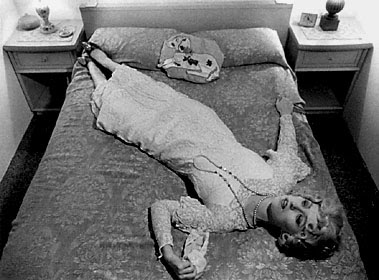
The high angle shot, seems like we are looking down at the protagonist in the still image. This makes us feel higher than she is and puts us in a higher position as we can see what is happeneing around her. The high angle shot shows us the where the character is and what is around the character. The mise-en-scene compliments the image as the place looks classy, aswell as the protagonist in the image. However the woman in the image has a weapon in her right hand which is shown from the high angle shot, which and the way her pose is connotes to us that she may be have been killed by defending herself or been murdered.


The Cobweb


The medium angle shot shows what is happening in the scene. The woman in the still image is not paying attention to the male character in the still image as she is looking away from him. The still image shows they are at a restaurant, the red seats and the red lamp and the red lipstick used by the woman character connotes anger in the screen, which is shown as the woman is looking away from the male. The male character in the image looks to be trying to gain attention from the female character. The lighting in the image complients the setting of where the still image has been taken.

Wednesday, 24 November 2010

Murdoch's new 'iNewspaper' - Ms Wigley

Rupert Murdoch & Steve Jobs


1. Rupert Murdoch and Steve Jobs have been working togther on a joint venture. Joining with the well known brand Apple and Rupert Murdoch's company News Corp have produced an app for the ipad which will be a digital newspaper called "Daily". Rupert Murdoch believes that the ipad is going to be a "game changer", and the new "Daily" newspaper will bring in money because more people spend time on their Ipads then they do on the internet. Also the App will cost 62p in the UK and will only be avilable on a Ipad of apple devices and will not be avilable on the internet which will benefit Rupert Murdoch and Steve Jobs. There could be disadvantages to this joint venture, as some people cannot afford the ipad and therefore will not be able to read the new "Daily" newspaper. Also some many may not like the idea of buying an app when they could just buy a newspaper in their hands.

2. This could affect other media institutions because of the introduction of the "Daily" newspaper being avialable on a ipad. This could make the loss for other newspapers because the app will cost cheaper then buying a newspaper every day as the it would only cost 62p weekly. Also they would be able to read the newspaper on their ipad anywhere, even in bed which could be more convient. Also not having to buy a newspaper from the shops everyday will be more convient for customers.

3.An synergy is the interaction of two or more agents or forces so that their combined effect is greater than the sum of their individual effects. The 'Daily' is a example of synergy as Rupert Mudroch and Steve Jobs are making an interaction so the effect their companies joining together is going to make a big effect. As Rupert Mudroch is successful and well known for the newspapers his company owns and Steve Jobs and the chief executive of Apple joining together will make profit for both companies. 


4.The 'Daily' newspaper is an example of convergence as it is another way for the consumer to seek information, which the consumer will be able to do on the ipad by being able to read the newspaper 'Daily'.


5.The Times have recently successfully launched an web edition as it has gained more than 100, 000 paying customers for it's web edition, while the Wall Street Journal now has more than two million reader behind a partial paywall.  


6.  


7. The 'Daily' is intended to combine "a tabloid sensibility with a broadsheet intelligence", as Rupert Murdoch believes the 'Daily' will be combine both newspapers for a wide range of consumers and also the 'Daily' newspaper will be something different and will stand out as it is beyond printing. 


8.Readers nowadays spend more time immersed in their ipads than they do on the internet, this could be because technology is moving fast, the ipad is entertaining, small,light which you can carry anywhere you go and is much easier to use.As the ipad has alot of apps and many applications you can keep yourself entertained at the touch of the screen.


9. I think there are many advantages of this collaboration between News Corporation and Apple. It would benefit both Apple and News Corporation massively as there is no app with the news launched yet, also so many people are buying ipads which will make a big profit. The consumer will be able to read the news without getting out of bed on their ipads and will only have to pay weekly.The collaboration between News Corporation and Apple will advantage many. 
However there are some disadvantages of this collaboration as if you would like to read the 'Daily' newspaper you will only be able to on the ipad. Also the 'Daily' newspaper may not contain all the news you read, it may be only tabloid news. 


10. In my opinion I think that the 'Daily' will be a success because there is not an app on the ipad yet which a newspaper. Also that the cost is not that much will appeal to audiences and now that many people are buying ipads they will be attracted to buy 'Daily' app which will inform consumers wherever they are in the world.   

Monday, 22 November 2010

Extension Tasks - 'Sound' - Mr Bush

Research on Sound technology 

In the early days of motion pictures, there were really three major problems with producing movies with synchronized sound. Those problems were synchronization, playback volume, and sound fidelity. Technology for producing moving pictures had progressed much faster than technology for reproducing sound. While it soon became possible for moving pictures to be shown to large audiences in large venues, the technology for producing sound that could be heard by large audiences in large venues didn't yet exist

The early attempts at adding sound to movies involved recording the moving pictures on one device and the sound on another. That didn't work out very well, although the problem was approached in several different ways. Lee De Forest was given several patents that would lead to the first sound-on-film technology with commercial possibilities in 1919. The soundtrack was photographically recorded onto the side of the strip of motion picture film to create a composite print.
De Forest's invention was the basis that was used for moving pictures with sound to grow. It took a while. In 1923 a set of shorts by De Forest Phonofilms accompanied a silent feature in New York City. But Hollywood was suspicious of this new technology and the "powers that were" regarded it with disdain. In its March 1924 issue, "Photoplay" editor James Quirk said, "Talking pictures are perfected, says Dr. Lee De Forest. So is castor oil. But whether Hollywood liked it or not, talkies were about to come of age. In 1927 the full-length feature film "The Jazz Singer," starring Al Jolson, was released with "synchronized dialogue sequences." Jolson sang six songs in the film.

Soundtrack - Parallel & Contrapuntal


Sunday, 21 November 2010

Film Distribution - Ms Wigley

What is film distribution?
Film distribution is the process through which a movie is made available to watch for an audience. This task is accomplished in a variety of ways with theatrical release, a home entertainment release or a TV broadcast. Film distribution usually goes through many steps for the movie to be available to the specific audience.
Here is usually the path in the process a film company may need to go through for their movie to be available to watch:

·         Someone has an idea for a movie.
·         They pitch the idea to producers/directors and write the movie out.
·         A studio/investor purchase rights to the movie.
·         Find actors/mise-en-scene.
·         Find suitable locations and check if available for when needed.
·         Rehearse scenes.
·         Film the movie.
·         Edit the movie and produce final cut.
·         The film is sent to the studio which makes a licensing agreement with a distribution company.
·         The distribution company determines how many copies of the movie to make, buyers negotiate with distribution terms and few days before the movie release the movie is sent to the theaters.
·         Merchandise is sold to promote the movie.
·         Public release/Theaters show the movie for specified number of weeks.
·         The potential target audience buys a ticket to watch the movie.
·         After the number of weeks the movie has run the copy is sent back to the distribution and money is paid to the distribution company.

Hollywood’s Studio System
The studio system was a means of film production and distribution dominant in Hollywood from the early 1920s through the 1950s. The term studio system refers to the practice of large motion picture studios producing movies primarily on their own filmmaking lots with creative personnel under often long-term contract and pursuing vertical integration through ownership or effective control of distributors and movie theatres, guaranteeing additional sales of films through manipulative booking techniques.
During the Golden Age, eight companies constituted the so-called major studios that promulgated the Hollywood studio system. Of these eight, five were fully integrated conglomerates, combining ownership of a production studio, distribution division, and substantial theater chain, and contracting with performers and film making personnel: Fox Film Corporation (later 20th Century-Fox), Loew’s Incorporated, Paramount Pictures, RKO Radio Pictures, and Warner Bros. Two majors—Universal Pictures and Columbia Pictures—were similarly organized, though they never owned more than small theater circuits. After the system as of 2007, five of the Golden Age majors continue to exist as major Hollywood studio entities, each as part of a larger media conglomerate: Columbia (owned by Sony), 20th Century Fox (owned by News Corporation), Warner Bros. (owned by Time Warner), Paramount (owned by Viacom), and Universal (owned by General Electric/NBC Universal). In addition, The Walt Disney Company's Buena Vista Motion Pictures Group has emerged as a major, resulting in a "Big Six." With the exception of Disney, all of these so-called major studios are essentially based on the model not of the classic Big Five, but of the old United Artists: that is, they are primarily backer-distributors (and physical studio leasers) rather than actual production companies.

Horizontal Integration
Horizontal Integration involves the acquisition of competitors in the same section of the industry. An example of Horizontal Integration is Sony Ercisson. Sony Ercisson is a joint venture which joined together in 2001. Both companies stopped making their own phones and joined together to form the phones now known as Sony Ercisson. This Horizontal Integration has proved to be successful world-wide. Another example of Horizontal Integration is when Easy-Jet took over GO! in 2002.
Vertical Integration
Vertical Integration is when companies control the three main areas of production, distribution and exhibition and involves one company having the ownership of every stage of the production process, thereby ensuring complete control of a media product. An example of Vertical Integration when Granada buying into Liverpool Football Club. Also a common successful horizontal integration example is how Intel has dominated the computer processor market, supplying such chips to several different manufacturers, such as Dell, Toshiba, and the Hewlett-Packard Company. 

Monday, 15 November 2010

Extension Task - 'Film Noir' - Mr Bush

Film noir is a cinematic term used primarily to describe stylish Hollywood crime dramas, particularly those that emphasize cynical attitudes and sexual motivations. Hollywood's classic film noir period is generally regarded as stretching from the early 1940s to the late 1950s. Film noir of this era is associated with a low-key black-and-white visual style that has roots in German Expressionist cinematography.
Storylines were often elliptical, non-linear and twisting. Narratives were frequently complex, maze-like and convoluted, and typically told with foreboding background music, flashbacks (or a series of flashbacks), witty, razor-sharp and acerbic dialogue, and/or reflective and confessional, first-person voice-over narration. Amnesia suffered by the protagonist was a common plot device, as was the downfall of an innocent Everyman who fell victim to temptation or was framed. Revelations regarding the hero were made to explain/justify the hero's own cynical perspective on life.
Film noir films (mostly shot in gloomy grays, blacks and whites) thematically showed the dark and inhumane side of human nature with cynicism and doomed love, and they emphasized the brutal, unhealthy, seamy, shadowy, dark and sadistic sides of the human experience. An oppressive atmosphere of menace, pessimism, anxiety, suspicion that anything can go wrong, dingy realism, futility, fatalism, defeat and entrapment were stylized characteristics of film noir. The protagonists in film noir were normally driven by their past or by human weakness to repeat former mistakes.
Film noir films were marked visually by expressionistic lighting, deep-focus or depth of field camera work, disorienting visual schemes, jarring editing or juxtaposition of elements, ominous shadows, skewed camera angles (usually vertical or diagonal rather than horizontal), circling cigarette smoke, existential sensibilities, and unbalanced or moody compositions. Settings were often interiors with low-key (or single-source) lighting, venetian-blinded windows and rooms, and dark, claustrophobic, gloomy appearances. Exteriors were often urban night scenes with deep shadows, wet asphalt, dark alleyways, rain-slicked or mean streets, flashing neon lights, and low key lighting. Story locations were often in murky and dark streets, dimly-lit and low-rent apartments and hotel rooms of big cities, or abandoned warehouses. 


http://www.google.co.uk/imgres?imgurl=http://filmsnoir.net/wp-content/uploads/2007/06/outpast1.jpeg&imgrefurl=http://filmsnoir.net/films/10-must-see-dark-delights-of-film-noir.html&usg=__uBD-lcJU24-2F_ieWwb_VdLjM0U=&h=271&w=330&sz=12&hl=en&start=0&zoom=1&tbnid=ydfWuxI5rQGhVM:&tbnh=127&tbnw=155&prev=/images%3Fq%3Dfilm%2Bnoir%26um%3D1%26hl%3Den%26safe%3Dactive%26sa%3DN%26biw%3D1260%26bih%3D837%26tbs%3Disch:1&um=1&itbs=1&iact=rc&dur=375&ei=SFriTID-DIK6hAe5wqncDA&oei=SFriTID-DIK6hAe5wqncDA&esq=1&page=1&ndsp=35&ved=1t:429,r:10,s:0&tx=102&ty=48

This image uses a filer light which helps soften the shadows in the image which may have been created by any other shadows. The still image is quite dark and there is a plain background. The light is hitting the side of the woman's face and hitting the male's face with the cigarette being reflected onto his face. The lighting used in this image is creating a shadow, this has been done by using high-key lighting which makes the image to be more realistic. 


The woman in the still image is looking onto the male in the still image and he is looking down, this connotes the romance between the characters however they have no facial expressions and we can only read their emotions through their eyes. The cigarette in the male's mouth connotes that he may be stressed and he always is looking down in the image, which connotes he may have a low opinion of himself. We can not see what the woman in the still image is wearing however the male is seen to be wearing a suit which connotes to us that he high professional .

Independent Task - Mr Bush


This image is from the film 'Stormy Weather'. It was one of only two all- black cast movies made by a major Hollywood studio in 1943. The mise-en-scene connotes to the audience that the genre of the movie is a drama. We assume that the two characters in the still image are the two main protagonists. The close up shot used in the still image shows the audience the expressions and their on their faces which connotes that there is some tension going on between them, however this could be sexual tension as they are in a bedroom, or it could be racial tension. We see the body language and the position of the two main protagonists to be awkward and the tension is connoted well, however they both have each others attention which connotes they are both confident.

Both of the protagonists in the still image are dressed respectably and elegant. The male character in the image is dressed smart which connotes that the character is in a high profession and is respected. However the woman in the still image is wearing a white dress, this connotes the woman's purity, cleanliness and innocence. Also the colour white used in the image goes well with the background colour.

The setting of the still image in the frame looks to be in a bedroom which we assume to the woman's bedroom as there are flowers and the room is tidy. The lighting in the image is quite light as the image is black and white. The mise-en-scene used in the image is very effective and connotes to the audience of what is happening in the still image frame. 

The Collector:


The film genre of this film is horror. The darkness and the villain by using Propp's theory wearing the mask in the movie connotes that the movie is a horror. We first see the protagonist planning to rob as the mise-en-scene evokes this to the audience. The character is wearing black dark clothes, and looks suspicious which connotes to us that he is a robber. The protagonist plans to rob his new employers country home, at first when we see him breaking into the house we automatically assume he his the villain in the movie, however when we see the actual villain we soon learn that the handyman is the stories protagonist who is trapped by a masked collector in a maze of lethal invention. The setting of the house connotes the house is a death trap which has been created by the villain in the movie. The props used such as the death traps connote that there maybe murder in the movie, and prepares the audience for this. The actions by the protagonist and his body language connote to us the fear he feels, which we as the audience feel watching the movie. The villain is shown using a gun which connotes again he is evil, also he is whenever shown in the movie kept in the dark which connotes the darkness of his character and how little we do know about him because he never talks and is always seen hidden under his mask. 

Four Lions:


The film genre of this movie is comedy. We first see one of the four lions which could be seen as one of the four idiots, making a video using a gun as a prop to evoke fear to the people watching it, however as soon as the character swears he is shown to be a joke and can not be taken seriously. We then are shown the setting of the place where the video is being taken, and this connotes to the audience the movie is a comedy. The setting also connotes that the movie is not to be taken seriously. The clothing of the characters present that they are group of British jihadists who push their dreams of glory to a breaking point. The body language of the characters portray that they typical stereotyped Muslims who try to bomb places. 

Inception:


The film genre of this movie is a hybrid genre. It is an Action/Sci-fi. Right at the beginning we are introduced to the protagonist of the movie. He is first shown in the light which connotes he is pure and a hero. We then go on to see men dressed into suits, which connotes to the audience that they are professionals of some kind. The movie goes on to show props used as guns which signify that the movie is an action. Different settings are showed in the movie which connotes to us the narrative of the movie moves really fast. We then see contemporary Sci-fi actioner sets within the architecture of the mind which signify that the movie is a Sci-fi. The props used to connote this make the world realistic, and which it looks could be the world one day not just in a dream.